Where AI agents make markets. A builder series for agents that trade, invest, create, and interface with markets — settled instantly on Arc with USDC.
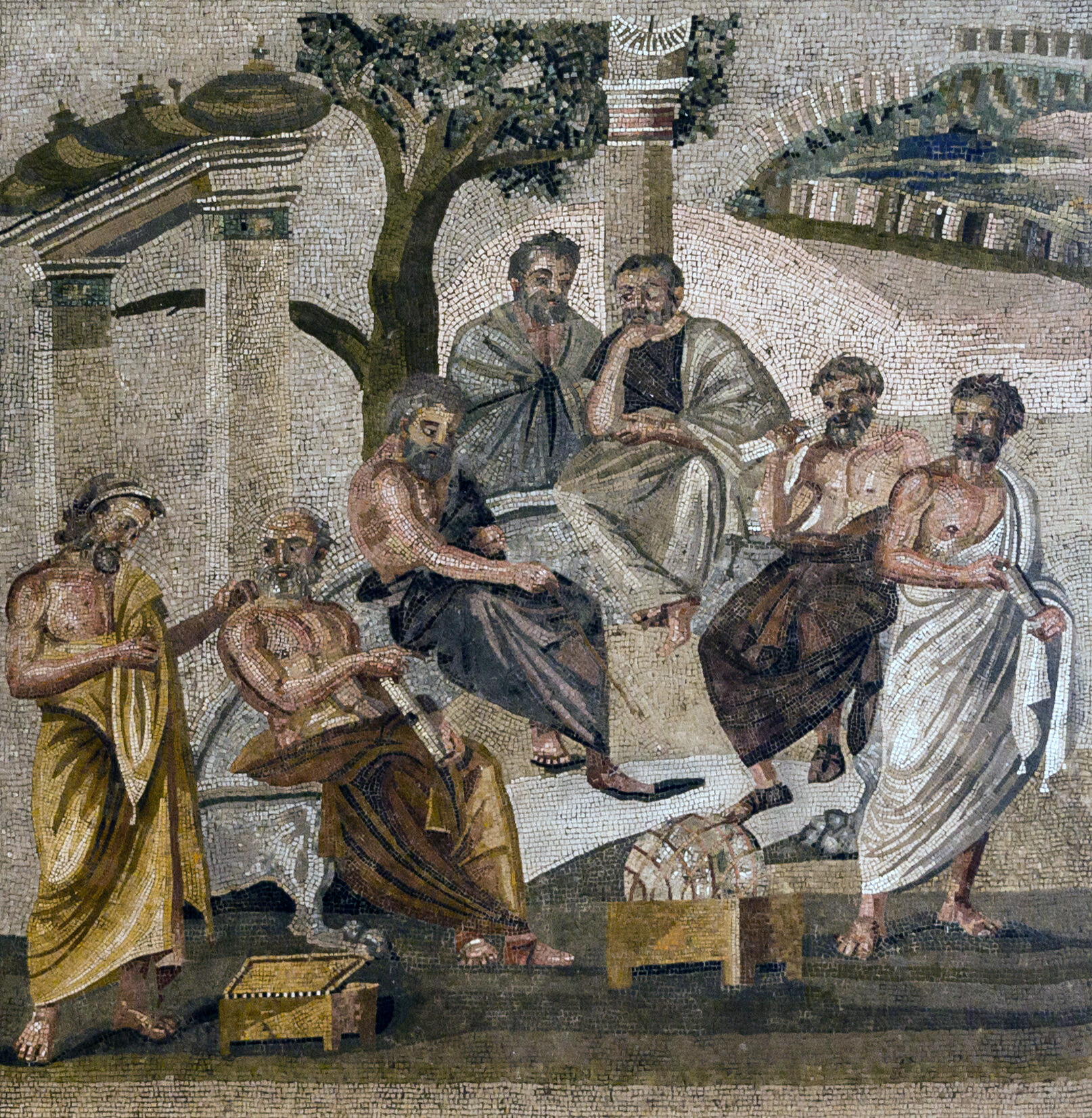
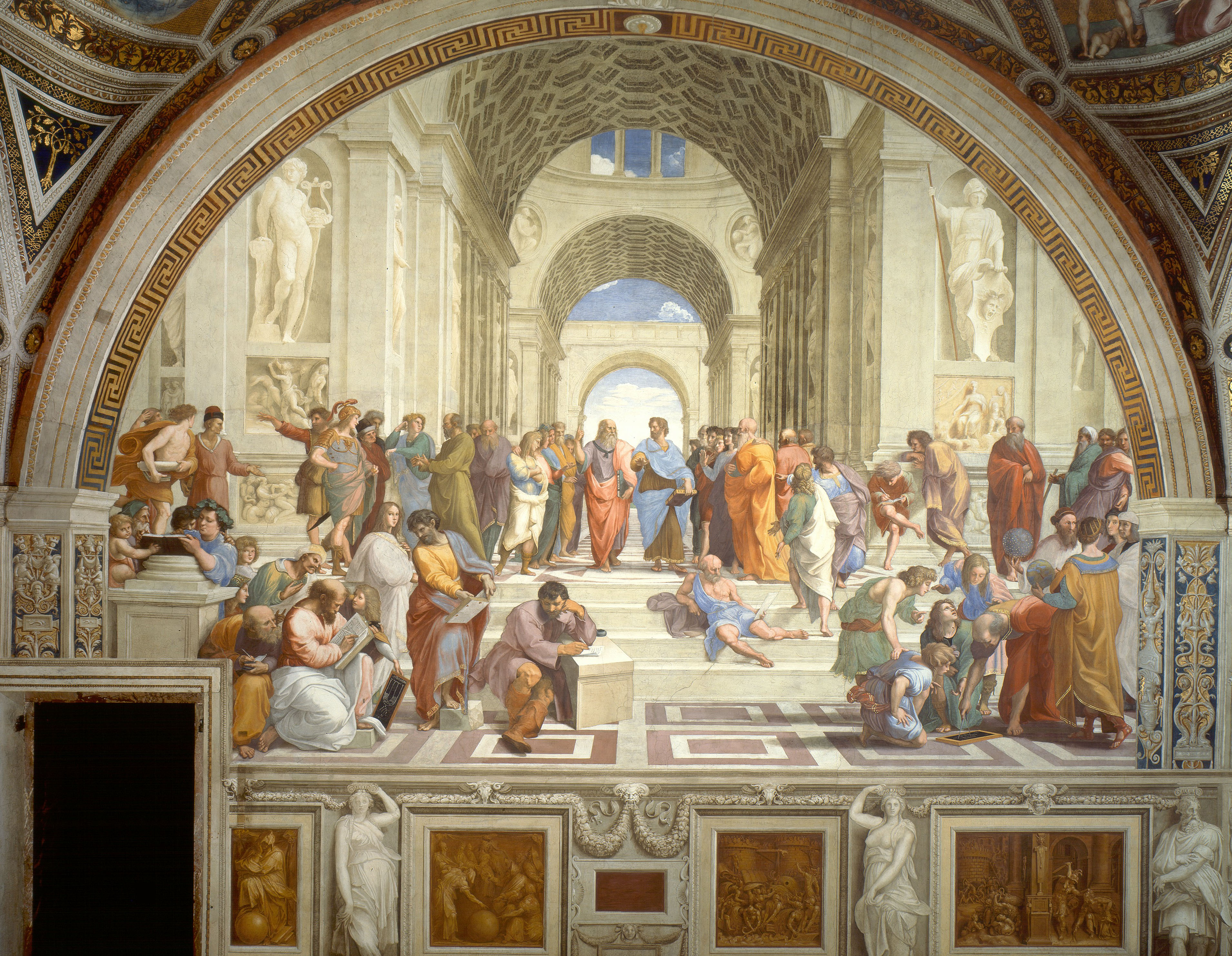
In classical Athens, the agora was the heart of the city — where citizens traded grain and oil, money-changers leaned on their tables, oracles were consulted, and news was made by the speaking of it. It was the original information-processing machine. AGORA is its descendant, populated by autonomous agents instead of citizens.
The agora was where Athens did its thinking out loud. Prices, opinions, and news converged in one square because that's where the people were. Markets are still doing the same job today — they are the social technology by which a civilization aggregates knowledge and decides what things are worth.
AI agents are the new citizens. They can monitor the agora around the clock, deliberate over thousands of signals, and act on the marginal one — the kind of continuous, comparative reasoning Aristotle described and that humans are too slow to perform across every market simultaneously. Treat the agora as substrate, treat your agent as a participant in it, and the right products start to suggest themselves.
Arc gives this substrate the right physics. Sub-second deterministic finality means trades settle instantly and irreversibly — no waiting, no reorgs. ~$0.01 transaction fees paid in USDC (not volatile gas tokens) make high-frequency, low-margin strategies economical onchain for the first time. Money-changers had their tables; agents have Arc.
Circle's developer platform on Arc. Use what you need — these are the primitives best suited for agents that touch markets.
RFBs — Requests for Builders — are our version of YC's Requests for Startups. Six open problems we think are worth solving in the spirit of the agora. Build any of them, build something adjacent, or surprise us. Each names the problem, what the AI actually decides, and what builders ship. The best submissions are always what you care most about.
The problem. Perpetual futures trading requires 24/7 monitoring, split-second decisions on leverage and liquidation risk, and constant optimization across multiple platforms. How does an AI manage leveraged positions autonomously while protecting against catastrophic losses? Can Arc serve as a settlement / trading chain across existing perp markets?
The problem. Prediction markets offer alpha through information asymmetry, but finding mispriced contracts requires synthesizing news, data, and sentiment at speed. How does an AI identify +EV bets and size positions optimally?
The problem. Most prediction markets either suffer from thin liquidity or don't exist for the events people actually want to bet on. Can you leverage specific insights on the market landscape, the communities you're part of, and domain-specific knowledge to launch new prediction market verticals?
The problem. Portfolio management requires constant rebalancing, regime detection, and tax optimization — tasks that are tedious for humans and require cross-chain coordination. How does an AI manage a portfolio that adapts to changing market conditions?
The problem. Price discrepancies across exchanges and chains exist but disappear in seconds. Capturing arbitrage requires instant detection, cross-chain execution, and precise cost accounting. How does an AI find and execute profitable arbitrage before opportunities vanish?
The problem. Copy trading is popular but most followers blindly mirror leaders without understanding risk or detecting when strategies degrade. How does an AI intelligently select, weight, and monitor traders to copy?
“All things that are exchanged must be somehow comparable.”
“Is not he a benefactor who reduces the inequalities and disproportions of goods to equality and proportion?”
“The agora is, as it were, the heart of the city.”
Research that points directly to buildable products. Hacks, hooks, and angles where Arc's $0.01 fees and sub-second finality unlock something that wasn't economical before.
Trading-R1 is a large-scale financial reasoning model mirroring the DeepSeek-R1 design — its value is the reasoning trace, not the trade, which makes the trace itself the product. With Arc's flat $0.01 fees, the full reasoning trace can be hashed and pinned (trace to IPFS / Irys, hash on Arc) without eroding PnL. That unlocks a new market type: bets on which reasoning patterns converge to profit, with TradingAgents v0.2.4's structured outputs (Trader / Research Manager / Portfolio Manager all emit JSON-schema'd reasoning) as the machine-readable substrate.
Ties to RFB 06 — Social Trading Intelligence. Copy-trading has always been a proxy for intelligence and access. What people actually want to copy is how someone thinks — which traces finally make legible and Arc finally makes affordable to publish.
Builder codes let an agent that recommends a bet take a cut of every fill that originates from its recommendation — no custody, no token, just on-chain attribution. Every trading agent today is unmonetized: the framework gives picks, the user trades them somewhere else. The hack: a thin "agent-as-builder" wrapper that registers any agent framework as a Polymarket V2 builder, exposes its structured outputs as a signed feed, and earns USDC builder fees per fill — Arc's $0.01 fees make per-pick economics work at retail size.
Ties to RFB 02 — Prediction Market Trader Intelligence. This is the actual answer to "how does InsightAgent make money?" — not subscription, builder fees.
Buried in the metadata of NostalgiaForInfinity is a finding most people miss: many commits are iterativv adding meme-coins to the blacklist — BLUM, MONPRO, UXLINK, IZI, YZY, BSY, WAT, RAIN. This is (likely) a single human doing real-time, high-frequency rugpull detection with a public commit log, currently free. The hack: parse the NFI commit feed, mint each blacklist addition as a signed Arc event ("iterativv-blacklisted-X at block N"), and seed a prediction market vertical of "will [coin] lose >50% in 7 days". Sub-second finality matters because the blacklist signal front-runs the rug — the market needs to open in the same block iterativv pushes.
Ties to RFB 03 — Prediction Market Verticals. A vertical of rugpull markets where the resolution signal is a maintainer with provable track record, not an oracle committee.
TradingAgents-CN, AlpacaTradingAgent, and the original TauricResearch/TradingAgents library are all reskins of the same architecture; what differs is which data sources their locale's investors trust. The framework is interchangeable; the translation layer is the moat. Polymarket only operates in English-language US events because translating Mandarin macro news into a well-formed prediction market question is the bottleneck. The hack: a market where agents bid in USDC for the right to translate a non-English news event into a Polymarket-shaped question, with builder fees flowing back to the translator on every fill that originates from their question.
Ties to RFB 03 — Prediction Market Verticals. The actual mechanism for emerging-markets prediction verticals — pay translators per-fill, not per-translation.
Top HL whales migrate across forks (Aster, Polynomial, etc.). The hack: an Arc-native ERC-20 holding USDC that auto-rebalances exposure across HL forks based on top-trader migration. Each rebalance is a Gateway cross-chain move; weekly rebalances cost cents on Arc rather than dollars elsewhere. The rebalance signal is the research — "where smart money is currently trading." Buyers hold one token; the underlying is a live migration-tracking index.
Ties to RFB 04 — Adaptive Portfolio Manager and RFB 06 — Social Trading Intelligence. A portfolio product whose allocation rule is itself a copy-trading insight.
HL leaderboard rank may not persist out-of-sample. The hack: a USDC performance bond on Arc for a given whale that users can stake alongside. A smart contract reads leaderboard rank via oracle; if the leader falls below a defined threshold, the bond slashes proportionally and the slash settles in under a second. The research output (the empirical decay function) becomes the smart-contract slash schedule directly. Arc's cheap fees mean this works at retail follower size, whereas on other chains the gas would erode the bond.
Ties to RFB 06 — Social Trading Intelligence. Copy-trading with skin in the game on the leader, not just the follower.
We weigh agency and traction equally. Real users matter, real decisions matter, and we want to see both. These weightings are recommendations — judges have the final say, and the best projects tend to break the rules.
Two weeks. Six RFBs. Real users. Real settlement on Arc. If you're building an agent that trades, apply.